
How RFID Can Help Reduce Waste Without Compromising Nutrition?
December 23, 2025
5 Mistakes During HACCP System Implementation
January 21, 2026
Labels lie more often than you think — not always by accident. From swapped origins to fake “organic” claims and empty health promises, mislabeling and fraud erode trust (and sometimes put people at risk). The good news: a mix of food science, traceability tech like RFID, and smarter regulation is pushing transparency forward.
What is mislabeling — and why it matters

Mislabeling means a food product’s packaging or digital information is inaccurate, ambiguous, or intentionally deceptive about ingredients, origin, allergens, nutrition, expiry date, or production claims. That can be anything from “country of origin” swaps, to incorrect allergen information, to misleading claims such as “wild-caught” vs. farmed. Mislabeling harms consumers (health risks, allergic reactions), honest producers (unfair competition), and regulators (lost trust). In the EU, food information must not be misleading — this is governed by Regulation (EU) No 1169/2011 on food information to consumers.
What is fraud in the food chain?

Food fraud and recall is deliberate deception for economic gain: diluting, substituting, forging origin labels, or selling expired/unsafe goods as fresh. Fraudsters exploit weak traceability, opaque supply chains, and manual record-keeping. Fighting fraud requires (1) better science to check product identity (e.g., lab tests, DNA/protein analysis), (2) stricter labeling rules and enforcement, and (3) digital traceability so every batch has a tamper-evident, verifiable history.
How RFID helps — the quick picture
RFID (Radio Frequency ID) tags are tiny electronic identifiers attached to items or packages. Unlike barcodes, they can be read remotely, in bulk, and without line-of-sight — enabling real-time visibility across the supply chain (from farm to store). A few concrete benefits:
Real-time tracking: know where a batch or pallet is at any time (reduces diversion and substitution).
Immutable chain-of-custody (when paired with secure cloud logs): each movement/event is timestamped, helping prove provenance.
Faster recalls & freshness checks: scan affected tags in minutes to remove only the risky lots.
Supports digital product passports / sustainability data: RFID can hold or link to richer lifecycle info for each product.
RFID devices themselves are regulated as radio equipment in the EU under the Radio Equipment Directive (RED, 2014/53/EU), which sets safety, spectrum and some privacy-related technical requirements. And when RFID data can identify people (e.g., loyalty-linked items), GDPR and related privacy rules apply.
How RFID helps stop mislabeling & fraud — practical examples
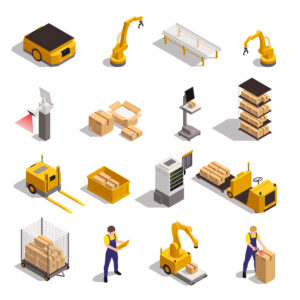
Authenticity & provenance: A producer can tag a crate at origin; downstream scans show if the crate matched the recorded origin and handling.
Tamper-evidence: RFID + sealed packaging makes it much harder for fraudsters to substitute contents undetected.
Enforced supply rules: Retailers can require suppliers to tag goods — the retailer’s systems will flag mismatches between the tag identity and the declared label at receipt. (Large retailers continued to expand RFID mandates in 2025; pressure from those mandates accelerated supplier adoption.)
Which EU laws control RFID + labelling and the privacy angle?

Food labelling & anti-misleading rules: Regulation (EU) No 1169/2011 — sets mandatory label requirements and prohibits misleading information.
RFID device conformity (hardware): Radio Equipment Directive 2014/53/EU (RED) — covers radio safety, spectrum use, and some privacy/security technical expectations.
Personal data / privacy: GDPR applies if RFID processing can identify a person (e.g., loyalty linkage, location tracking tied to an individual); controllers must follow data minimization, PIA, consent/legal basis, security.
Quick trends (2025 snapshot)
Retail mandates (big-box and apparel) pushed supplier adoption and drove economies of scale in tag production. Multiple trade outlets reported an acceleration of RFID deployments in 2025.
EU moves on transparency (Digital Product Passports / circular-economy rules) make machine-readable product data — often implementable via RFID or QR — more likely to be required in coming roll out phases.
Conclusion
RFID technology is not just a digital trend — it is a practical tool that strengthens transparency, control, and trust across the food supply chain. However, its real value is unlocked only when technology is properly aligned with regulatory requirements and integrated into daily business operations.
Altinteg plays a key role in this process by:
Helping companies stay closely aligned with legislation (including EU Regulation 1169/2011, GDPR, and the Radio Equipment Directive)
Reducing the risk of food fraud and mislabeling through digital traceability and data-driven control
Simplifying and automating processes, minimizing manual work, human error, and operational complexity
As a result, businesses achieve not only regulatory compliance, but also operational efficiency, supply chain transparency, and increased consumer trust.