
The Micro-Moment That Breaks the Chain
July 6, 2026
What is Color Coding?
July 13, 2026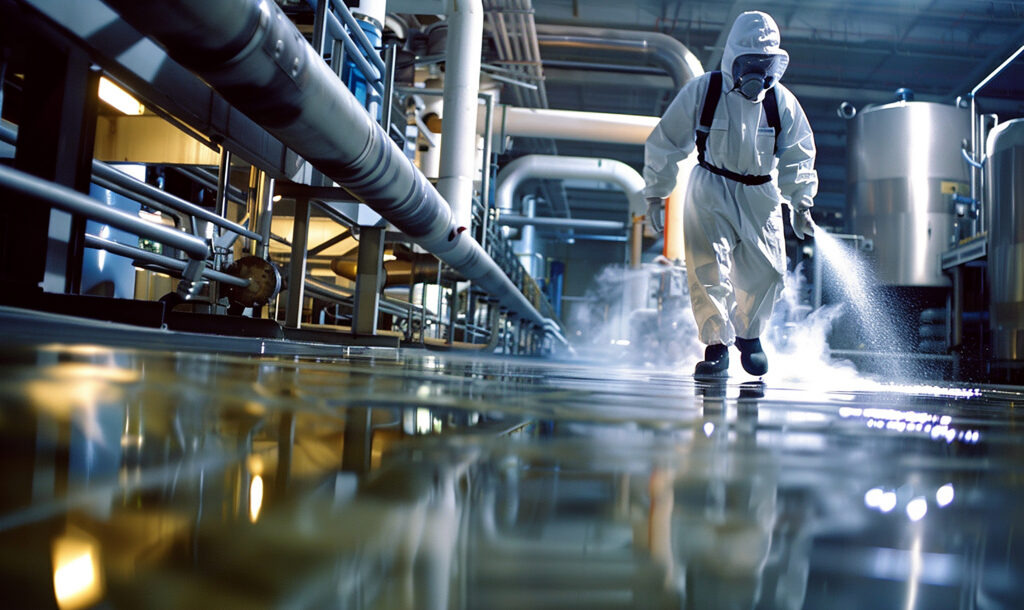
Food safety does not begin only with high-quality raw materials or a well-designed HACCP system. It begins with effective hygiene practices, and at the heart of those practices is a comprehensive Cleaning and Sanitation program. Every food manufacturing facility, whether producing dairy products, meat, beverages, baked goods, or packaging materials, faces continuous microbiological, chemical, and physical contamination risks. If cleaning procedures are not properly planned, documented, implemented, and verified, the production environment itself can become a source of contamination.
Cleaning is much more than simply removing visible dirt. Its primary objective is to create an environment where microorganisms, allergens, chemical residues, and foreign materials cannot contaminate products. This is why Good Manufacturing Practices (GMP), Good Hygiene Practices (GHP), HACCP, ISO 22000, and FSSC 22000 all recognize Cleaning and Sanitation as one of the most important Prerequisite Programs (PRPs) within a food safety management system.
A well-designed sanitation program minimizes the risk of cross-contamination, protects consumer health, improves product consistency, and prepares organizations for both internal and external audits. Rather than viewing cleaning as a routine housekeeping task, successful food manufacturers treat it as a critical food safety control that directly impacts product quality, regulatory compliance, and customer confidence.
1. Cleaning Schedules: The Foundation of Effective Sanitation
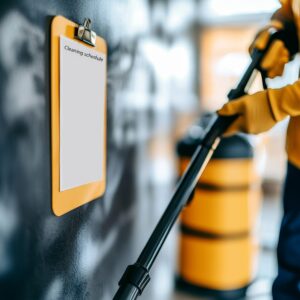
Every successful sanitation program begins with formal cleaning schedules. Without documented cleaning plans, sanitation activities often depend on individual experience or memory, which inevitably increases the likelihood of inconsistency and human error.
A cleaning schedule is far more than a simple calendar of activities. It is a documented procedure that clearly defines what must be cleaned, how it should be cleaned, how often it should be cleaned, who is responsible for performing the task, and how the effectiveness of the cleaning process will be verified.
Cleaning schedules should cover every area and every piece of equipment that could become a potential contamination source throughout the facility.
This includes:
- processing equipment,
- pipework,
- packaging machinery,
- Cleaning In Place (CIP) systems,
- storage silos,
- tanks,
- production rooms,
- packaging areas,
- raw material warehouses,
- ingredient storage areas,
- finished product warehouses,
- floors, walls, ceilings,
- drains,
- overhead structures,
- ventilation systems,
- dust extraction units,
- cleaning equipment,
- floor scrubbers,
- vacuum cleaning systems,
- and even the external areas surrounding the factory.
However, simply listing equipment is not sufficient. Each cleaning schedule should specify the cleaning frequency, cleaning methods, chemicals used, chemical concentration, water temperature, contact time, verification activities, responsible personnel, pre-start inspection requirements, and all records that must be completed.
This structured approach provides consistency throughout daily operations while demonstrating to auditors that cleaning and disinfection activities are managed through a systematic process rather than informal routines. Well-documented cleaning schedules also make employee training easier, improve accountability, and ensure that no critical area is overlooked.
2. Cleaning Equipment: A Frequently Overlooked Source of Contamination

Many food manufacturers invest significant effort in cleaning production equipment while paying considerably less attention to the tools used to perform the cleaning itself. In reality, contaminated brushes, squeegees, cloths, floor scrubbers, or cleaning carts can easily become vehicles for cross-contamination if they are not properly managed.
For this reason, international food safety standards require strict segregation of cleaning equipment according to its intended use. Equipment used for cleaning floors and drains should never be used to clean food contact surfaces or processing equipment. Likewise, cleaning tools used in raw product areas should never be transferred into post-heat treatment or ready-to-eat production areas.
One of the most effective methods for preventing accidental cross-use is colour coding. Assigning specific colours to different production zones provides employees with an immediate visual reminder of where each cleaning tool belongs. This simple practice significantly reduces the possibility of transferring microorganisms from high-risk areas into clean processing environments.
Proper storage is equally important. Cleaning equipment should always be cleaned after use and stored in a clean, dry location away from the floor. Brushes should be stored with their bristles facing downward to prevent moisture accumulation, while squeegees should be single-bladed to improve cleaning effectiveness and reduce areas where contamination can accumulate. Disposable cleaning cloths should be used whenever possible for product contact surfaces to eliminate the risk of reintroducing contaminants during cleaning.
Floor scrubbers deserve particular attention because they frequently move throughout production areas. Best practice requires separate floor scrubbers for raw and cooked product areas. Furthermore, scrubbers should clean around drains rather than travelling directly across drain channels, reducing the risk of spreading microorganisms throughout the facility.
Although cleaning equipment may appear to be a small operational detail, its proper management plays a significant role in preventing cross-contamination and maintaining hygienic production conditions.
3. Cleaning In Place (CIP): Automation Requires Continuous Control
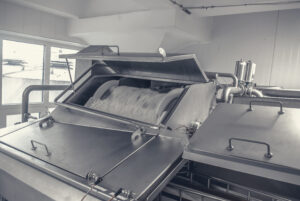
Modern food manufacturing increasingly relies on Cleaning In Place (CIP) systems to clean pipelines, tanks, heat exchangers, and other enclosed processing equipment without dismantling them. CIP technology reduces production downtime, improves cleaning consistency, minimizes labour requirements, and supports efficient sanitation of complex processing systems.
However, installing an automated CIP system does not guarantee effective cleaning. The performance of every CIP cycle depends on continuous monitoring and proper control of critical operating parameters.
CIP tanks, including recovered rinse water tanks, must themselves be emptied and cleaned at frequencies that prevent them from becoming sources of microbial contamination. If these tanks are neglected, they may contaminate the very systems they are intended to clean.
An effective CIP program also requires alternating alkaline and acid cleaning solutions. Using only one type of cleaning chemical over extended periods allows mineral scale to accumulate inside equipment and pipelines, reducing cleaning efficiency and creating protected areas where microorganisms can survive.
Chemical concentration should be verified regularly through independent testing to confirm that cleaning solutions remain effective. During every cleaning cycle, four critical parameters must be carefully monitored: cleaning temperature, solution flow rate, contact time, and chemical concentration. Even small deviations in one of these factors can significantly reduce cleaning performance.
To further protect food safety, CIP systems used for raw product processing should remain completely separate from those used for heat-treated or ready-to-eat product lines. Double-seat valves equipped with leakage indicators provide additional protection by preventing cleaning chemicals from entering production lines during operation.
Where CIP solutions are recovered and reused, filtration systems should be maintained to remove contamination before the cleaning solution re-enters the system.
An effective CIP program is not simply automated cleaning—it is a controlled, monitored, and verified sanitation process that requires continuous attention.
4. Cleaning Verification: How Do We Know Cleaning Was Effective?

Completing a cleaning task does not automatically mean that cleaning has been successful. One of the most common misconceptions in food manufacturing is assuming that if equipment looks clean, it is hygienically safe.
Verification provides the evidence needed to confirm that sanitation procedures consistently achieve the desired results.
Visual inspection remains the first step of verification, allowing employees to identify obvious residues or cleaning failures. However, visual inspection alone cannot detect microorganisms, allergen residues, or invisible chemical contamination.
For this reason, modern food facilities combine visual inspections with ATP testing, microbiological surface sampling, allergen verification where applicable, chemical residue testing, and routine review of CIP operating parameters.
Another essential verification activity is the pre-start inspection. Before production begins, designated personnel should confirm that equipment is clean, cleaning chemicals have been completely removed, tools are properly stored, and the production environment is ready for safe manufacturing.
Verification also includes reviewing cleaning records to ensure procedures were completed as scheduled, cleaning chemicals were correctly prepared, and any deviations were investigated and corrected.
These verification activities demonstrate that the sanitation system functions effectively on a daily basis rather than existing only on paper. They also provide objective evidence during internal audits, certification audits, regulatory inspections, and customer assessments.
Ultimately, verification transforms cleaning from an assumption into measurable proof of food safety performance.
Conclusion
Cleaning and sanitation are far more than routine housekeeping activities. They represent one of the most important preventive controls within every food safety management system. Comprehensive cleaning schedules, properly managed cleaning equipment, validated CIP systems, and continuous verification work together to reduce contamination risks and protect both products and consumers.
A food manufacturing facility may invest in advanced technology and employ highly skilled personnel, but without an effective sanitation program, contamination risks will always remain.
True food safety begins with cleanliness, and cleanliness begins with well-designed procedures, properly trained employees, documented systems, and a culture that recognizes sanitation as a critical part of producing safe, high-quality food.