
RFID’s Role in Personalized Food Systems
March 17, 2026
In today’s fast-evolving food industry, consumers are no longer satisfied with basic labels and vague ingredient lists. They want real transparency—to know where their food comes from, how it was handled, and whether it meets safety and nutritional expectations.
Traditional barcodes, while useful, are no longer enough. The future lies in RFID (Radio Frequency Identification) and advanced traceability technologies that go beyond static labeling and create intelligent data layers.
This shift is not just innovation—it is becoming a regulatory and ethical necessity.
1. Why Traditional Labels Are No Longer Enough
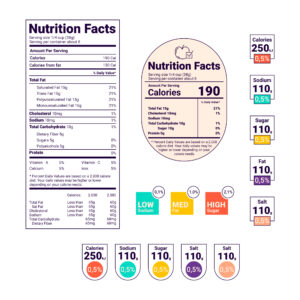
Food labels were designed decades ago to provide essential information like ingredients, expiration dates, and nutritional values. However, modern supply chains are far more complex.
The problem?
- Labels are static and limited in space
- They cannot reflect real-time changes (temperature abuse, storage conditions, recalls)
- Consumers are left with partial information
This creates a gap between what consumers see and what actually happens behind the scenes.
Today’s consumers are more informed and demand:
- Full ingredient traceability
- Allergen transparency
- Ethical sourcing information
- Real-time product safety updates
Static barcodes simply cannot deliver this level of detail.
2. RFID and Smart Traceability: A New Era of Food Transparency
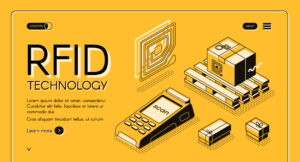
RFID technology allows products to carry dynamic, digital identities instead of just printed codes.
Unlike traditional barcodes, RFID can:
- Store detailed product histories
- Be scanned without direct visibility
- Provide real-time tracking across the supply chain
When combined with traceability systems, this creates a complete digital footprint of a food product—from farm to fork.
What does this mean in practice?
- Consumers can access detailed product data via smartphones
- Businesses can monitor temperature, transport, and storage conditions
- Authorities can perform faster and more accurate recalls and inspections
This is where food safety meets technology-driven trust.
3. European Regulations: Moving Toward Digital Traceability
The European Union is actively pushing toward digital product transparency and traceability systems.
While RFID is not yet universally mandatory for all food products, several regulatory frameworks are clearly moving in that direction:
Key regulatory drivers:
- EU Regulation (EC) No 178/2002
→ Establishes the foundation of traceability (“one step back, one step forward” principle) - EU Farm to Fork Strategy
→ Promotes digital innovation, transparency, and smarter food systems - Digital Product Passport (DPP) (under the Ecodesign for Sustainable Products Regulation)
→ A major upcoming requirement that will introduce digital data carriers (such as RFID, QR, or NFC) for product transparency across sectors - General Food Law modernization & supply chain digitization initiatives
→ Strongly encourage real-time, tech-enabled traceability systems
While not explicitly mandating RFID alone, EU policy direction clearly favors technologies like RFID as part of future compliance.
4. What Happens If Businesses Don’t Adapt?

Failing to adopt advanced traceability technologies is no longer just a technological gap—it’s a business risk.
Potential consequences include:
Regulatory Risks
- Non-compliance with evolving EU transparency requirements
- Increased scrutiny during audits and inspections
Food Safety Risks
- Delayed or ineffective product recalls
- Inability to track contamination sources
Financial & Brand Damage
- Loss of consumer trust
- Higher recall costs and legal liabilities
- Reduced competitiveness in export markets
Market Exclusion
Retailers and international partners are increasingly demanding digitally traceable products. Without it, businesses risk being excluded from premium and EU markets.
Conclusion: From Labels to Living Data

The future of food safety and nutrition transparency lies beyond the barcode.
RFID and advanced traceability systems are transforming how we understand food—not as static products, but as data-rich, transparent systems.
For consumers, this means confidence and clarity.
For policymakers, it ensures control and accountability.
For businesses, it’s an opportunity to build trust, efficiency, and compliance.
The question is no longer if the industry will adopt intelligent traceability—but how fast.