Why Dietitians Should Care About RFID in Food Supply Chains
November 11, 2025
How to Get HACCP Certification – Protecting Your Business and Customers
December 17, 2025
In today’s food systems, consumers expect more than delicious meals — they expect proof. Proof of where food came from, how it was handled, how long it traveled, and whether its nutritional value stayed intact from the moment it left the farm. This growing demand for transparency has reshaped the global supply chain, making data integrity the heart of modern food safety, nutrition quality, and consumer trust.
But guaranteeing data integrity in complex supply chains is not easy. Products travel thousands of kilometers, pass through multiple operators, experience different storage conditions, and face high risks of temperature abuse, fraud, and data manipulation. That is why innovative technologies such as RFID (Radio Frequency Identification) are transforming the Farm-to-Fork journey — offering real-time traceability, automated monitoring, and highly reliable data that cannot be easily altered.
This article is prepared by Food Safety Alliance and explores why nutrition today depends on strong data integrity and how RFID helps businesses protect quality, ensure transparency, and strengthen brand credibility.
The Farm-to-Fork Journey Needs Trustworthy Data

Every step — farming, processing, packaging, transport, storage, and retail — carries risk.
Even the smallest deviation in temperature or handling can reduce product safety, degrade nutrients, or increase microbial growth.
Some examples:
Cold chain breaks can reduce vitamin levels in dairy products and fresh juices.
Temperature abuse in meat or fish accelerates spoilage and nutrient loss.
Incorrect storage can destroy antioxidants in fruits and vegetables.
Unverified origins can hide fraud and substitution of lower-quality ingredients.
To maintain nutritional value, protect the consumer, and comply with regulations, the information collected across this journey must be accurate, continuous, and tamper-proof.
This is where RFID becomes essential.
How RFID Strengthens Data Integrity
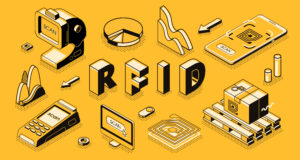
RFID is more than a tracking tool — it is a continuous data ecosystem. Unlike barcodes, which require manual scanning, RFID tags automatically transmit data to readers through radio waves. This enables:
1. Automated, Error-Free Data Capture
Human error is one of the biggest causes of traceability failures. RFID eliminates manual logging and ensures every movement, batch, and condition is captured precisely and instantly.
2. Real-Time Cold Chain Visibility
RFID sensors can monitor:
Temperature
Humidity
Light exposure
Shock or movement
This is critical for meat, dairy, eggs, fish, frozen foods, and ready-to-eat meals. If a product is exposed to unsafe conditions, alerts can be triggered immediately — preventing quality loss and ensuring compliance with food safety standards.
3. Transparent Sourcing and Authenticity
RFID technology supports verified origin tracking. Each item can carry a digital identity linked to:
Farm of origin
Harvest date
Processing history
Storage conditions
Distribution routes
This drastically reduces fraud and ensures consumers know exactly what they are buying.
4. Better Nutrient Preservation Through Monitoring
Nutrient degradation often begins long before a product reaches the shelf. RFID monitoring helps businesses maintain the optimal conditions needed to protect:
Vitamins
Minerals
Antioxidants
Protein integrity
Freshness indicators
By documenting the entire journey, brands can confidently claim — and prove — nutritional value.
5. Enhanced Compliance for HACCP, ISO 22000, and Retail Standards
RFID provides a complete and accurate digital record, simplifying audits and demonstrating full control over the supply chain.
Why It Matters for Businesses

Adopting RFID-powered data integrity offers strategic advantages:
Higher product quality and freshness
Fewer recalls and complaints
Stronger brand trust
Faster supply chain operations
Better forecasting and inventory accuracy
Clear evidence for regulatory inspections
With digital-first consumers becoming more conscious about what they eat, companies that embrace transparent and verifiable data gain a competitive edge.
Conclusion

A Future Where Food Talks — And Data Tells the Truth
The global movement toward smarter, safer, and more transparent food systems is accelerating. RFID is no longer a luxury technology; it is becoming a business necessity for companies that want to guarantee quality from farm to fork.
By investing in data integrity now, businesses can protect consumers, elevate nutrition standards, and build credibility in a market where trust is everything.
Visit the AltInteg website for more information and a free appointment.