
Why is HACCP implementation mandatory?
February 14, 2026
ISO 9001 – A Quality Management System that strengthens business
February 26, 2026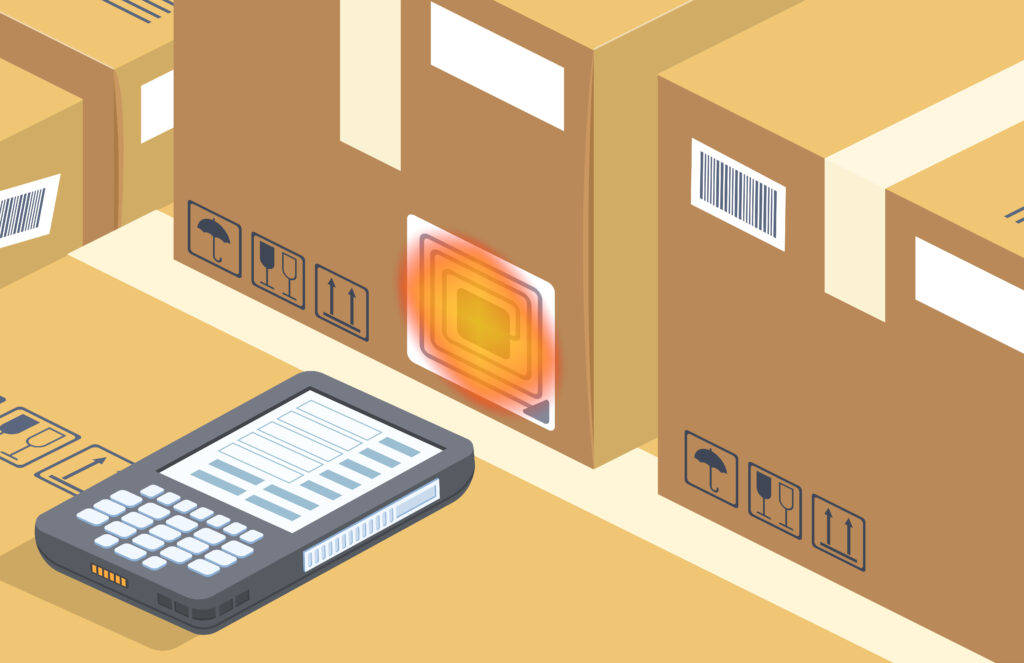
In today’s food industry, a label is more than a marketing tool. It is a promise.
“Organic.”
“Gluten-free.”
“Locally sourced.”
“Allergen-free.”
But what actually stands behind these claims?
As food safety professionals, we know that trust is built not on words — but on systems. And increasingly, those systems are powered by technology. Among the most transformative tools in modern traceability are RFID (Radio Frequency Identification) and digital twins. Together, they are reshaping how we verify ingredient origins, monitor freshness, and control allergen risks in real time.
Let’s explore how.
What Is RFID and Why Does It Matter?
Radio-frequency identification (RFID) is a wireless system that uses radio waves to identify and track objects. In the food industry, RFID tags can be attached to:
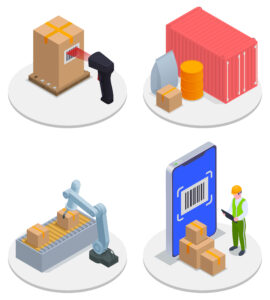
Raw material containers
Finished product packaging
Pallets and logistics units
Cold chain shipments
Unlike traditional barcodes, RFID does not require line-of-sight scanning. Multiple items can be scanned simultaneously, and data can be updated dynamically.
This means faster inventory control, better stock rotation, and — most importantly — real-time traceability.
For companies implementing HACCP and advanced monitoring systems, RFID strengthens critical control points by adding automatic, verifiable data to each stage of the supply chain.
From Farm to Fork: Verifying Ingredient Origins

One of the biggest challenges in food fraud and mislabeling is verifying origin claims.
Is that olive oil really from Italy?
Is that fish sustainably sourced?
Is that meat truly from the declared farm?
RFID creates a digital identity for each batch. When combined with integrated databases, every movement of a product — from farm, processing facility, warehouse, to retail — is recorded automatically.
This enables:
Instant trace-back during inspections
Faster recall management
Proof of geographic origin
Prevention of substitution or adulteration
For food businesses aiming to comply with international standards and export markets, this level of transparency is no longer optional — it is becoming expected.
What Is a Digital Twin in Food Production?

A digital twin is a virtual replica of a physical product, process, or system. In the food industry, it can represent:
A production line
A batch of products
A storage facility
A full supply chain
Through sensors, IoT devices, and RFID integration, real-time data feeds into the digital twin. Temperature, humidity, transport duration, processing parameters — everything becomes visible and measurable.
Instead of reacting to problems, companies can predict them.
For example:
If cold chain temperature rises above critical limits, the digital twin signals deviation.
If a batch passes through an allergen-risk zone, the system flags cross-contact risk.
If shelf-life parameters are compromised, freshness data is updated immediately.
This is preventive control at a completely new level.
Altinteg — Smart Traceability for Your Business

Altinteg is a company that provides Traceability as a Service, offering advanced traceability systems, including RFID-based end-to-end devices and software solutions. Their technology captures the movement of raw materials and finished products, environmental parameters, and other critical data in real time, strengthening label claims and increasing transparency across the food supply chain and other sectors. For initial information, customers can request a free introductory call, allowing them to better understand how the technology works and what benefits it can bring to their business.
Challenges to Consider

Technology is powerful — but it requires investment and structured implementation.
Companies must consider:
Infrastructure costs
Staff training
Data integration with existing ERP systems
Cybersecurity protection
However, as regulatory expectations grow and supply chains become more complex, digital traceability may soon shift from competitive advantage to regulatory requirement.
Conclusion

The question “What’s really in your food?” is no longer philosophical. It is measurable.
RFID and digital twins are transforming traceability from static documentation into living, real-time systems. They support ingredient origin verification, freshness control, allergen management, and fraud prevention — all while strengthening HACCP principles and preventive culture.
For food safety professionals and business leaders, the real opportunity lies not just in adopting technology, but in integrating it into a culture of transparency.
Because in the modern food industry, trust is not printed on the label.