
RFID + Nutrition for Health-Conscious Consumers
February 2, 2026
Why is HACCP implementation mandatory?
February 14, 2026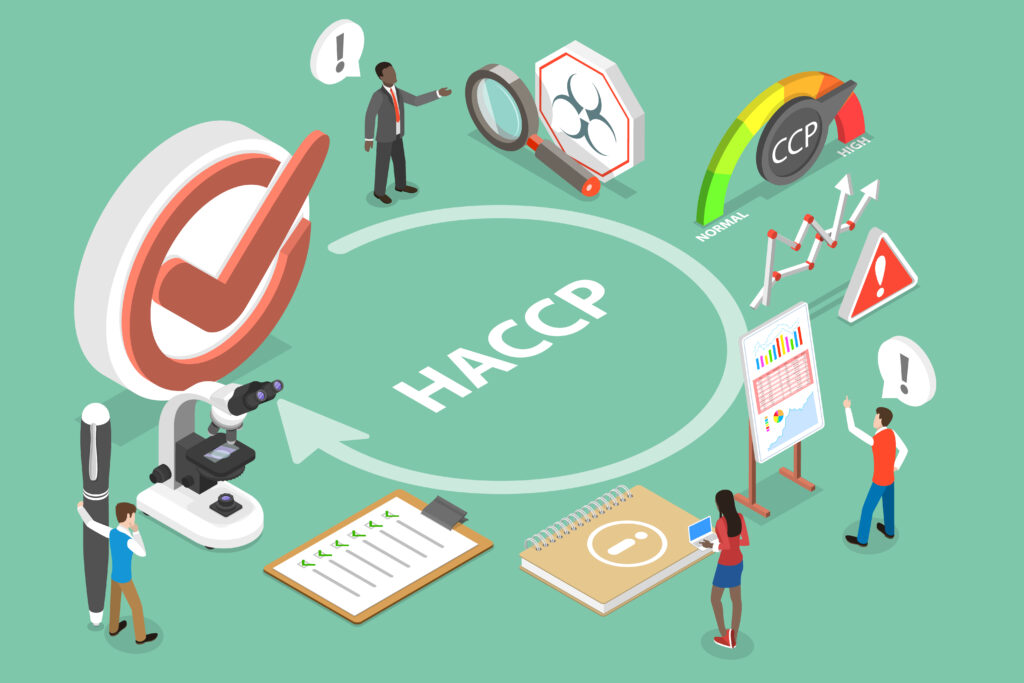
Creating a HACCP (Hazard Analysis and Critical Control Points) plan may initially seem technical or even complicated, but once you understand its importance, it becomes a logical and essential system for any business operator involved in food production. Whether you are a food business owner, a quality manager, or simply a food safety enthusiast, today Food Safety Alliance will introduce you to how to develop a HACCP plan step by step.
What is a HACCP plan and why do you need it?
A HACCP plan is a structured approach to identifying, evaluating, and controlling food safety hazards in the food production process. It is not just a document — it is a powerful prevention system that ensures food is produced in a safe environment with minimal risks.
The main hazards are:
- Biological: Bacteria, viruses, parasites (e.g., Salmonella, E. coli, Listeria).
- Chemical: Cleaning agents, pesticides, or chemical migration from packaging.
- Physical: Foreign objects such as glass, metal, plastic, or even bone fragments.
How to develop a HACCP analysis step by step?

For each step of the process flow, identify potential biological, chemical, and physical hazards. Ask yourself:
- What could go wrong?
- Where could the hazard occur?
- What is the likelihood and severity of this hazard?
For example:
Receiving stage: Chemical hazard (pesticides) may be present on raw vegetables.
Processing stage: Biological hazard, if improper temperature control increases the likelihood of bacterial growth.
Packaging stage: Physical hazard, if product contamination may occur during packaging.
Then, determine whether the hazard is significant — if it is, you must control it within your HACCP plan.
Determination of Critical Control Points

A Critical Control Point (CCP) is a step at which you must control a hazard to ensure food safety. Use a decision tree to determine whether a step is a CCP.
The next step is to establish critical limits.
Set a maximum or minimum value that must be met to control the hazard at the CCP. For example:
- The minimum internal cooking temperature for poultry is 75°C.
- The metal detector sensitivity is set at 1.5 mm for ferrous metals.
Critical limits must be measurable, scientifically validated, and verified.
If the product does not reach a safe temperature → it must be re-cooked or discarded.
If the metal detector fails → stop production, inspect the product, repair the metal detector, and re-test the equipment.
Corrective actions must always include:

- Resolving the immediate problem
- Preventing recurrence
- Documenting the correction of the non-conformity
After the correction, preventive actions must be improved to reduce the chance of the problem occurring again.
A good HACCP plan includes both approaches, and the stronger your preventive measures are, the fewer corrective actions you will need.
Conclusion

With a HACCP plan, instead of reacting to problems, you anticipate and control them before they affect your customers or your reputation.
By understanding your process, identifying risks, and implementing smart controls, you create not only safe food, but also a more efficient and reliable business.