
5 Common Mistakes in the Kitchen
September 1, 2026
Traceability has always been a fundamental part of food safety.
A food business needs to know where its raw materials came from, which production process they entered, which batch they became part of, where the finished product was stored, how it moved through the supply chain, and where it was ultimately delivered.
For many years, this information was managed through paper records, spreadsheets, invoices, delivery documents, batch numbers, manual scanning, and handwritten logs.
These systems can work in a relatively simple supply chain.
But modern food supply chains are no longer simple.
Products move through multiple suppliers, production sites, warehouses, distribution centers, transport operators, retailers, and other touchpoints. At every stage, information needs to remain connected to the physical product.
This is where RFID — Radio Frequency Identification — is changing the way food traceability can work.
Instead of relying entirely on people to manually record where a product has been and when it moved, RFID can automatically capture the identity and movement of tagged products or logistics units when they pass through designated reading points.
The result is a shift from “we recorded what happened” toward “the system knows what happened.”
And that difference can become extremely important when food safety, recalls, freshness, inventory, and supply chain visibility are at stake.
1. Why Traditional Traceability Is No Longer Enough?

Traditional traceability systems are not necessarily wrong.
The problem is that many of them depend heavily on manual data entry and fragmented records.
Imagine a pallet of food moving from a manufacturer to a warehouse and then to a distribution center.
At each stage, someone may need to:
- identify the product;
- record the batch;
- record the quantity;
- record the time;
- record the destination;
- update a spreadsheet or ERP system;
- check accompanying documents;
- and repeat the process at the next location.
Every manual step creates an opportunity for an error.
A number can be entered incorrectly.
A document can be lost.
A batch can be recorded against the wrong shipment.
A product can physically move before the corresponding system record is updated.
The result is a dangerous gap between the physical movement of food and the digital record describing that movement.
This becomes particularly problematic during a recall or food safety investigation.
A company may technically have traceability records, but retrieving the exact information needed can take hours or even days when employees need to search through different documents and systems.
Modern regulatory thinking increasingly emphasizes the importance of linking traceability information to specific events throughout the supply chain. For example, the U.S. FDA’s Food Traceability Rule is built around Critical Tracking Events (CTEs) and Key Data Elements (KDEs), covering activities such as shipping, receiving, and transformation.
The objective is not simply to have more paperwork.
The objective is to make it possible to determine what happened to a specific food, where it came from, where it went, and which products may be affected if something goes wrong or recall is needed.
This is where digital traceability becomes increasingly valuable.
2. Why Every Stage of the Food Chain Matters?
Food traceability should not stop when the product leaves the production line.
A truly effective system should connect the product’s journey across the entire supply chain.
This can include:
Raw material sourcing → receiving → storage → production → transformation → packaging → finished goods storage → shipping → distribution → retail → final point of sale.
This is especially important with respect to the HACCP system.
HACCP identifies threats, control measures and important milestones in the process. Traceability helps the company to connect a specific product with a specific raw material, process, batch and direction of delivery.
At each stage, important information can be generated.
A raw material has a supplier and lot.
A production batch has a manufacturing date and process history.
A finished product has a lot code and expiration date.
A pallet has a physical location.
A shipment has a destination and transportation history.
A temperature-sensitive product may also have information about the conditions under which it was stored and transported.
The value of traceability comes from connecting these pieces of information.
GS1’s traceability framework and EPCIS standard are designed around sharing supply-chain event information and creating visibility into the physical movement and status of products. EPCIS can also connect event information with sensor data, certifications, locations, inventory information, and other business-relevant data.
This is particularly important for food because time matters.
If a contamination issue is identified, the company needs to know not only which batch was affected, but also where that batch is now.
Is it still in production?
In the warehouse?
In transit?
At a distribution center?
Already delivered to several retailers?
The more precisely this information can be identified, the more precisely the business can respond.
A good traceability system therefore protects not only food safety but also the business itself.
3. What RFID Changes?
RFID introduces a different way of capturing product information.
Instead of requiring every item or logistics unit to be manually scanned one at a time with a traditional barcode, RFID readers can automatically capture information from RFID tags using radio frequency communication.
One of the important advantages is that RFID does not generally require the same direct line-of-sight scanning process associated with traditional barcodes. GS1 notes that RFID can capture product information as tagged items pass through reader points in warehouses, distribution centers, and retail environments.
This can fundamentally change the workflow.
Imagine a pallet entering a warehouse.
With a traditional manual process, an employee may need to scan or enter information.
With an RFID-enabled process, the pallet can potentially be identified automatically as it passes through the appropriate reading zone.
The system can then associate the physical movement with digital information.
This creates a much more connected traceability environment.
What can RFID help improve?
Visibility.
Businesses can gain a clearer picture of where products and logistics units are located.
Inventory accuracy.
Automated identification can reduce dependence on manual counting and recording.
Traceability.
Product movements can be linked to specific identities, lots, cases, pallets, or other units.
Recall management.
More precise information can help businesses identify affected products and limit the scope of a withdrawal.
Operational efficiency.
Automation can reduce repetitive manual data-entry activities.
Data quality.
Reducing manual recording can reduce certain types of transcription and identification errors.
Supply chain transparency.
Different events can be connected to create a more complete picture of the product journey.
GS1 highlights RFID’s ability to provide visibility into inventory and product location and to support identification across manufacturing, distribution, retail, and other supply-chain points.
However, RFID is not simply a replacement for a barcode.
Its real value appears when identification, data capture, software, business processes, and traceability requirements are designed as one connected system.
4. Where Altinteg Fits Into This Transformation?

The transition from traditional traceability to connected traceability requires more than RFID tags.
Businesses need to connect physical identification, data capture, software, processes, and supply-chain events.
This is the direction in which Altinteg is developing its traceability solutions, combining RFID, smart labeling, data capture, and software connectivity to connect physical products with verified information across the supply chain. Altinteg describes its Traceability as a Service model as an end-to-end approach for food producers, retailers, and regulated-sector operators.
The important point is that technology should solve a business problem.
RFID should not be introduced simply because it is modern.
The first questions should be:
Where are we losing visibility?
Where are manual errors occurring?
How long does it take to complete a traceability exercise?
How quickly could we identify affected products during a recall?
Where are products getting lost or delayed?
Which information is currently disconnected?
And which data could help us make better food safety and operational decisions?
Only after answering these questions should the technology architecture be designed.
Conclusion
Traceability has evolved.
The old model was largely based on recording what happened after an event.
The new model is moving toward automated identification, connected data, real-time visibility, and event-based traceability.
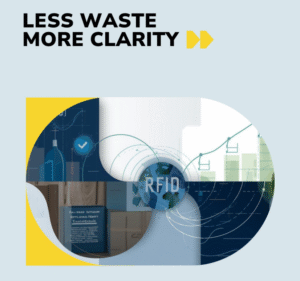
RFID can play an important role in this transformation by connecting physical products and logistics units with digital information throughout the supply chain.
For food businesses, this means more than operational efficiency.
It can mean faster recalls, better root cause analysis, improved inventory accuracy, reduced waste, stronger supplier control, better freshness management, and greater confidence in food safety decisions.
But RFID alone does not create traceability.
People, processes, data standards, technology, and food safety systems must work together.
The ultimate goal is simple:
To know where the food came from, what happened to it, where it is now, and where it went next.
Because in modern food safety, traceability is no longer just a record of the past.
It is the infrastructure for making better decisions about the future.