Escherichia coli and Foodborne Diseases — 3 Key Risks
August 25, 2026
RFID and the Future of Food Traceability
September 8, 2026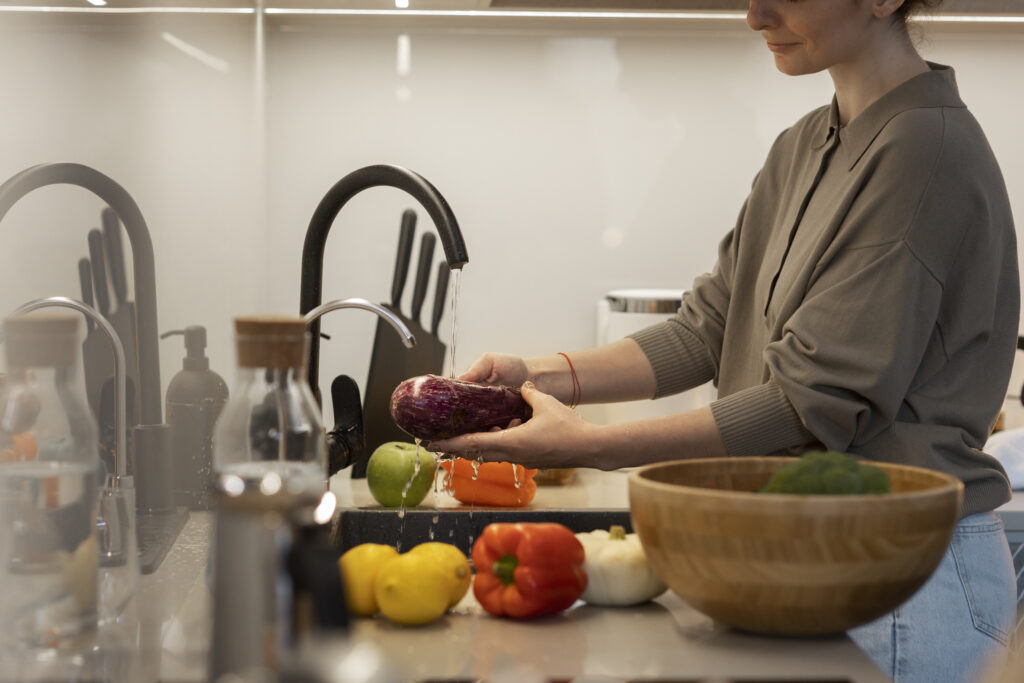
Some mistakes made during food preparation may seem insignificant: using the same cutting board for different foods, inadequate handwashing, leaving prepared food at room temperature for too long, or checking whether food is cooked by appearance rather than using a thermometer.
However, these everyday practices can create significant risks of foodborne illness and biological, chemical, and physical hazards.
The World Health Organization identifies five key principles for safer food handling: keep clean, separate raw and cooked food, cook thoroughly, keep food at safe temperatures, and use safe water and raw materials.
In a professional kitchen, these principles should not be treated simply as good practice. They should be integrated into GMP/GHP requirements, HACCP systems, staff training, monitoring, verification, and corrective actions.
In this article, we examine five common mistakes made during food preparation, the risks they create, where those risks come from, and how food businesses can prevent them.
1. Allowing Raw and Ready-to-Eat Food to Come Into Contact
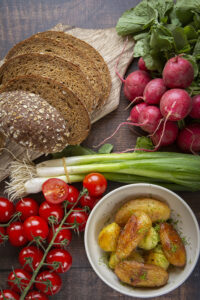
One of the most serious mistakes in a kitchen is using equipment or utensils for raw meat, poultry, fish, or eggs and then using them for ready-to-eat food without effective cleaning and sanitation.
For example, if raw chicken is prepared on a cutting board and tomatoes for a salad are subsequently cut on the same board without proper cleaning and disinfection, cross-contamination can occur.
Raw food may contain pathogenic microorganisms such as Salmonella, Campylobacter, or certain strains of E. coli. These microorganisms can be transferred through hands, knives, cutting boards, containers, work surfaces, and other utensils.
Cross-contamination becomes particularly dangerous when pathogens reach ready-to-eat food that will not receive another cooking step.
How can this be prevented?
Professional kitchens should maintain clear separation between raw and ready-to-eat foods.
This can involve appropriate zoning, dedicated or clearly identified utensils, correct storage arrangements, controlled personnel movement, and effective cleaning and sanitation.
The WHO recommends separating raw meat, poultry, and seafood from other foods and using separate utensils and cutting boards where appropriate.
Where the same equipment must be used for different food categories, an effective Cleaning & Sanitation procedure must be completed between activities.
The objective should not simply be a surface that looks clean.
The business should have confidence that the cleaning and disinfection process is actually effective.
2. Poor Hand Hygiene and Personal Hygiene
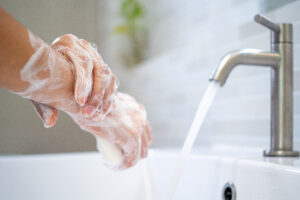
People working in a kitchen can be both the strongest protection against contamination and one of its most important potential sources.
Microorganisms on hands can be transferred to food, utensils, work surfaces, packaging, and food contact equipment.
A particularly important risk occurs when an employee moves from handling raw food to ready-to-eat food without properly washing their hands or changing contaminated gloves when required.
Gloves do not automatically make food handling safer.
A contaminated glove can transfer microorganisms just as effectively as a contaminated bare hand.
Personal hygiene therefore needs to be based not only on written rules, but also on competency and correct behavior.
Employees should understand:
when handwashing is required;
how hands should be washed effectively;
when gloves need to be changed;
when an employee should not handle food;
how to move between raw and ready-to-eat activities;
and why each of these actions matters.
The WHO recommends washing hands before handling food, during food preparation when necessary, and after using the toilet. Food contact surfaces and equipment should also be properly cleaned and sanitized.
Why does staff competency matter?
Training alone is not enough.
An employee may know a rule but still fail to apply it consistently if they do not understand why it is important.
Competency should therefore include knowledge, practical skills, and the ability to make the correct decision when a food safety risk occurs.
This is where HACCP, GHP, and Food Safety Culture come together.
3. Inadequate Cooking and Thermal Processing
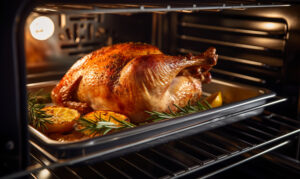
Another common mistake is determining whether food is ready simply by looking at it.
Statements such as “it doesn’t look pink anymore” or “it feels hot enough” do not always provide reliable evidence that food has reached a safe temperature.
Thermal processing can be one of the most important control measures for biological hazards.
If food is not cooked adequately, pathogenic microorganisms may survive and reach the consumer.
Particular attention is required when preparing minced meat, poultry, eggs, seafood, large pieces of meat, and other high-risk foods.
The WHO (World Health Organization) emphasizes thorough cooking as an important food safety principle and provides 70°C as a general reference for safe food preparation. However, specific critical limits must always be established according to the product, process, validated safety requirements, and applicable legislation.
This is why professional kitchens should use food thermometers rather than relying solely on visual assessment.
If a thermal process is identified as a CCP within the HACCP plan, the business should establish an appropriate critical limit, monitoring method, responsible person, and corrective action for deviations.
4. Losing Control of Time and Temperature
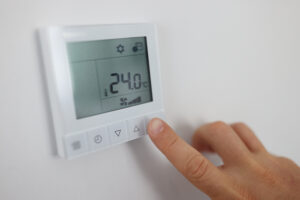
Food may be prepared correctly and still become unsafe if storage and service conditions are not properly controlled.
Many microorganisms can multiply rapidly under favorable conditions. Leaving prepared or perishable food at room temperature for an extended period can therefore create a significant food safety risk.
The WHO recommends not leaving cooked food at room temperature for more than two hours, cooling perishable food promptly, and keeping refrigerated food preferably below 5°C. For hot holding, WHO recommends maintaining food above 60°C.
Specific temperature requirements should always be aligned with applicable local legislation, the type of food, and the organization’s risk assessment.
Kitchen controls should include:
regular monitoring of refrigerator temperatures;
control of hot-holding temperatures;
recording preparation times where required;
monitoring cooling processes;
control of reheating;
and maintaining records when required by the food safety system.
Simply saying “it is in the refrigerator” does not automatically mean “it is safe.”
Temperature should be measured, controlled, and verified.
5. Contaminated or Incorrectly Used Equipment and Chemical Hazards

The fifth common mistake is poor management of kitchen utensils and food contact surfaces.
Knives, cutting boards, cloths, containers, and other equipment can become sources of contamination when they are not properly cleaned, stored, or used for their intended purpose.
For example, using the same cloth to clean a floor and then a food contact surface can transfer microorganisms directly to an area where food is prepared.
Cleaning equipment should therefore be properly organized and, where appropriate, color-coded and dedicated to specific uses.
At the same time, kitchens must also control chemical hazards.
Incorrect use of cleaning and disinfecting chemicals, excessive concentrations, improper storage near food, or inadequate rinsing can result in chemical contamination.
Cleaning chemicals should therefore be clearly identified, safely stored, correctly dosed, and used according to established instructions.
Staff competency is again essential.
Employees should understand not only which chemical to use, but also the correct concentration, application area, contact time, and required procedure.
Conclusion

A small mistake in a kitchen can sometimes become a serious risk for consumers.
Mixing raw and ready-to-eat foods, poor hand hygiene, inadequate cooking, loss of time and temperature control, and incorrect use of contaminated equipment can create biological, chemical, and physical hazards.
But most of these risks are preventable.
Effective GMP/GHP practices, Cleaning & Sanitation, HACCP, competent employees and personal hygiene, regular monitoring, verification, and corrective actions create multiple layers of protection.
Food safety starts where food is prepared.