
FSSC 22000 Version 7 — What Has Changed?
October 6, 2026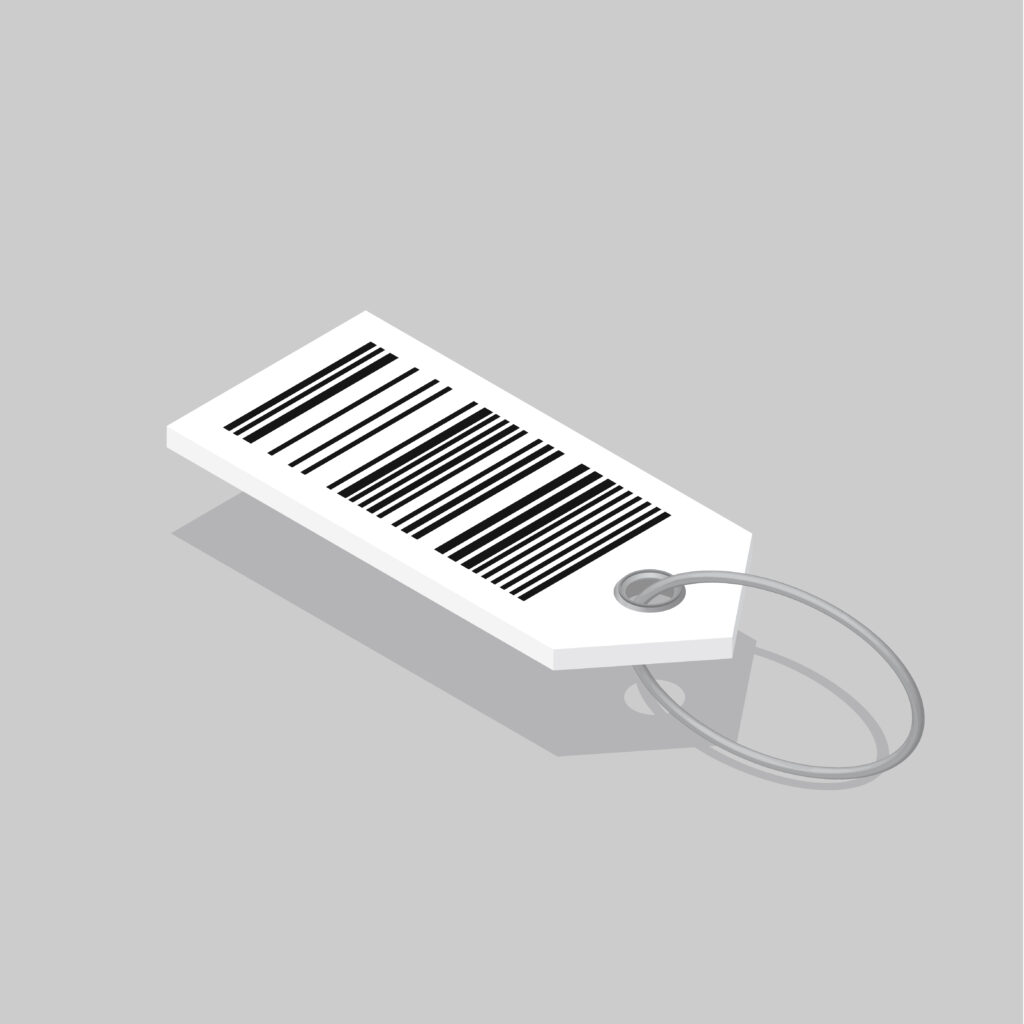
In modern supply chains, accurate product identification and reliable traceability are essential for efficient operations, inventory control, and food safety. Businesses need to know what products they have, where those products are located, which batches they belong to, and where they have moved throughout the supply chain.
Two widely used identification technologies are barcodes and Radio Frequency Identification (RFID). Both can support inventory management and traceability, but they work differently and offer different advantages.
So, which technology is better: RFID or barcode? The answer depends on the business objective, the operating environment, the required level of automation, and the information that needs to be captured.
1.What Is a Barcode and How Does It Work?
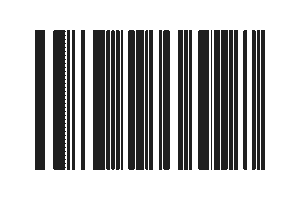
A barcode is a visual representation of data that can be read by a scanner. Depending on the barcode type, it can identify a product, shipment, location, batch, or other information.
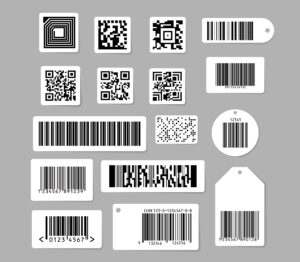
Common examples include EAN/UPC barcodes used in retail, GS1-128 used in logistics and supply chains, and two-dimensional codes such as QR codes and Data Matrix.
In many applications, a barcode is scanned individually. The scanner must be able to read the printed symbol, which usually requires a clear line of sight and a suitable scanning position.
Key advantages of barcodes include:
- Low implementation costs in many applications.
- Simple and widely available scanning equipment.
- Broad adoption across retail, manufacturing, warehousing, and logistics.
- Easy integration into established product identification processes.
- Suitability for product labels, packaging, shipping documents, and batch identification.
However, a barcode system depends on correct scanning and accurate data entry. If a label is damaged, obscured, incorrectly printed, or not scanned at the required process stage, information may be missing from the system.
It is also important to understand that identifying a product is not the same as achieving complete traceability. Effective traceability requires reliable records connecting product identification with relevant events, such as receiving, production, packaging, storage, and distribution.
2.What Is RFID and How Does It Work?
RFID stands for Radio Frequency Identification. It uses radio waves to identify objects through electronic tags and readers.
A typical RFID system includes RFID tags attached to products, packaging, pallets, containers, or reusable assets; readers and antennas that capture tag information; and software that processes the collected data and connects it to business systems.
Unlike a conventional barcode, RFID does not generally require the tag to be visually exposed to a scanner. Depending on the technology and operating conditions, readers can capture information from multiple tags in a short period without scanning each item individually.
This makes RFID particularly useful in environments where businesses need faster inventory counts, automated movement tracking, and greater visibility across high-volume operations.
Key advantages of RFID include:
- Rapid identification of multiple tagged items.
- Reduced dependence on manual, item-by-item scanning.
- Automated recording of movements at appropriately configured checkpoints.
- Improved inventory visibility and asset tracking.
- Potential reduction in manual data-entry errors.
RFID also has limitations. Performance can be affected by liquids, metal surfaces, packaging materials, tag placement, reader configuration, and the surrounding environment. The system must be designed and tested for the specific application.
RFID is therefore not a universal replacement for barcodes. It is an additional identification and data-capture technology that can be valuable when its capabilities address a real operational need.
3.RFID vs. Barcode: Key Differences
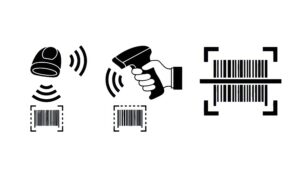
The main difference between these technologies is how they capture identification data. Barcodes use optical scanning, while RFID uses radio-frequency communication.
| Feature | Barcode | RFID |
|---|---|---|
| Identification method | Optical scanning | Radio-frequency communication |
| Line of sight | Usually required | Generally not required |
| Reading multiple items | Usually one code at a time | Multiple tags may be read together |
| Automation | Depends on scanning procedures | Can automate data capture at configured checkpoints |
| Infrastructure | Often relatively simple and affordable | Requires tags, readers, antennas, and system integration |
| Common applications | Retail checkout, labeling, shipping, batch identification | Automated inventory, asset tracking, movement visibility, high-volume operations |
| Main limitation | Scanning and label readability | Environmental interference, tag suitability, and implementation costs |
Barcodes are often the practical choice when a business needs a straightforward and affordable identification method. RFID can offer additional value when manual scanning becomes a bottleneck or when the business needs frequent, automated visibility of many items.
In some operations, using both technologies is the most effective solution. A barcode can remain available for conventional scanning, while RFID supports automated inventory and movement tracking. The technologies can complement each other rather than compete.
GS1 provides standards and guidance for both barcode and RFID-based identification. Its approach to traceability emphasizes identifying products, capturing relevant events, and sharing reliable information across the supply chain.
4.How RFID Supports Food Safety and Product Traceability?

In the food industry, traceability is not simply an administrative requirement. It is a practical tool for controlling risks, investigating incidents, and responding effectively when a product does not meet safety or quality requirements.
A traceability system should connect relevant information from raw material receipt through production, packaging, storage, and distribution. The level of detail depends on the business, product, risk assessment, legal obligations, and customer requirements.
Consider a food manufacturer that discovers a potential contamination issue involving a particular raw material batch. The company needs to determine which finished products used that batch, where those products are stored, and which customers or distribution centers received them.
If the relevant records are incomplete or scattered across spreadsheets and paper documents, identifying the affected products may take considerable time. This can delay decisions and increase the risk of unnecessary product withdrawals or incomplete recalls.
When appropriately integrated with production and inventory systems, RFID can help automate the capture of selected movements and improve visibility of materials, work in progress, finished products, and logistics units. This can make it easier to locate stock and connect physical items with relevant digital records.
RFID can also support inventory accuracy, stock rotation, and the identification of products approaching their expiry dates when the system captures the necessary product and date information.
However, RFID does not detect microbiological, chemical, or physical contamination. It cannot replace hazard analysis, preventive controls, laboratory testing, or the operational procedures required by a food safety management system.
Under HACCP-based systems and standards such as ISO 22000 and FSSC 22000, technology should support established controls and documented processes. Businesses still need to define responsibilities, maintain accurate records, verify that the system works as intended, and ensure that traceability information can be retrieved when required.
The value of RFID lies in improving the reliability and speed of data capture—not in replacing food safety management itself.
5.RFID and Digital Traceability: The Role of Altinteg
Implementing RFID successfully requires more than attaching electronic tags to products. The technology must be connected to real business processes, data systems, and operational responsibilities.
This is where an integrated approach to traceability becomes important. Altinteg offers a Traceability as a Service model that brings together RFID technology, smart labeling, data capture, software connectivity, and operational support.
Such an approach can help businesses build traceability around their actual workflows rather than introducing disconnected technology. Depending on the project, RFID data can be connected with inventory or enterprise systems to improve item-level visibility and provide a clearer picture of product movements.
For food businesses, the potential benefits include more efficient inventory operations, better visibility of stock movements, and stronger connections between physical products and digital records.
The technology and system design must still match the specific product, packaging, environment, and business requirements. A pilot project and performance verification can help establish whether RFID delivers measurable operational value.
Digital traceability is most effective when technology, people, and procedures work together. RFID provides a way to capture identification data, while integrated software and well-designed processes turn that data into information that employees can use.
Conclusion

RFID and barcodes serve the same broad purpose—identifying products and supporting information management—but they do so in different ways.
Barcodes remain an effective, accessible, and economical option for many identification tasks. RFID can provide additional advantages where businesses need automated data capture, faster inventory operations, and better visibility of product movements.
For food manufacturers, distributors, retailers, and logistics providers, the decision should be based on operational needs, traceability objectives, food safety risks, and the expected return on investment.
Most importantly, neither technology guarantees complete traceability on its own. Reliable traceability requires accurate identification, consistent data capture, connected records, clearly defined responsibilities, and regular verification.
When implemented correctly, RFID can become a valuable part of a modern traceability system—helping businesses move from fragmented records toward more automated, timely, and reliable operational visibility.