RFID vs. Barcode: Which Technology Is Better ?
October 14, 2026
The proper placement and use of sinks are important prerequisites for food safety in any food business. Simply having a sink is not enough. Its purpose, accessibility, hygienic condition, and correct use all matter.
Restaurants, cafés, bakeries, and food manufacturing facilities carry out various activities every day: employees wash their hands, rinse vegetables, clean utensils and equipment, and wash work areas. If these activities are not properly separated, the risk of cross-contamination increases. For example, microorganisms from equipment that has been in contact with raw meat can spread to the sink, employees’ hands, or other surfaces and eventually contaminate ready-to-eat food.
Proper sink design, correct handwashing practices, and effective cleaning procedures are important elements of Good Hygiene Practices (GHP), prerequisite programmes (PRPs), and a HACCP-based food safety management system.
1.How Many Sinks Are Needed, and What Should Each One Be Used For?
There is no single sink configuration suitable for every food business. The number required depends on the type of operation, the foods handled, production volume, equipment used, workflow, and applicable legal requirements.
For example, a café that mainly serves beverages and packaged food will have different needs from a restaurant that handles raw meat, fish, vegetables, and ready-to-eat food.
Handwashing sink. Employees should have easy access to a dedicated handwashing sink. It must be used exclusively for handwashing and must not be used to wash food, dishes, or equipment. It should be supplied with running water, liquid soap, and a hygienic hand-drying method, such as single-use paper towels.
Food preparation sink. This is needed in businesses that wash fruit, vegetables, or other ingredients. Its use must be organized to prevent food from being contaminated by dirty equipment, cleaning chemicals, or other sources. Where required by the operation and applicable regulations, the food preparation sink must be separate from the handwashing sink.
Dishwashing and equipment-washing facility. This is intended for cleaning dishes, kitchen utensils, and equipment. Its size and configuration should be appropriate for the items being washed and the applicable requirements. Disinfection must be carried out when necessary.
Utility or mop sink. Where necessary, a separate utility sink or designated washing area should be provided for cleaning floor-cleaning equipment and mop buckets. Floor-cleaning tools must not be washed in a food preparation sink because this may spread contamination into food-handling areas.
Not every food business requires all these facilities in the same configuration. The final decision should be based on an assessment of the operation, risks, workflow, and applicable legal requirements.
2.Where Should Sinks Be Located, and How Should Workflows Be Separated?
The location of a sink is just as important as the number of sinks. If a handwashing sink is inconveniently located, employees may be more likely to skip handwashing. If the dishwashing area is poorly positioned in relation to food preparation areas, splashing or dirty equipment may contaminate ready-to-eat food.
Handwashing sinks should be easily accessible near areas where employees handle food. They must not be blocked by boxes, ingredients, or equipment. Handwashing facilities associated with toilet areas must also comply with applicable hygiene requirements.
During dishwashing, dirty and clean items must be kept separate. Ideally, the workflow should move in one direction:
Dirty equipment → Washing → Rinsing → Disinfection, where necessary → Hygienic drying → Clean equipment storage.
Clean equipment must not be placed beside dirty dishes or on contaminated, wet surfaces. It should be dried hygienically and stored in a protected area.
Water splashing and drainage must also be considered. Splashes from a sink can transfer microorganisms to work surfaces, clean utensils, or exposed ingredients. Sink placement should therefore minimize the risk of contaminated water and equipment reaching food or food-contact surfaces.
When designing a food premises, it is good practice to prepare a layout showing sinks, food preparation areas, dishwashing facilities, waste areas, and employee movement routes. This helps establish a workflow in which dirty and clean activities are separated as effectively as possible.
3.How Can Microbial Contamination Be Prevented, and When Should Employees Wash Their Hands?
Microbial cross-contamination occurs when microorganisms transfer from a contaminated source to food, hands, equipment, or another surface. Sinks can become part of this contamination pathway if they are used incorrectly or are not cleaned adequately.
First, activities must be separated appropriately. Equipment that has been in contact with raw meat must not be used for ready-to-eat food without proper cleaning and, where necessary, disinfection. Simply rinsing a sink with water between activities is not sufficient.
Cleaning and disinfection are two different processes. Cleaning removes food residues, grease, and dirt from surfaces. Where disinfection is necessary, an appropriate disinfectant must then be applied according to the manufacturer’s instructions, including the specified concentration and contact time. Disinfection may be ineffective if the surface has not been cleaned properly first.
Sinks, taps, drains, and surrounding surfaces should be included in the cleaning programme. Cleaning equipment must also be controlled: tools used for floors and toilets must be kept separate from those used on food-contact surfaces.
Handwashing is one of the most important preventive measures. Employees must wash their hands:
- Before starting food handling.
- After using the toilet.
- After handling raw meat, poultry, fish, or other potentially contaminated ingredients.
- When switching from raw food to ready-to-eat food.
- After handling waste, dirty utensils, or cleaning equipment.
- After coughing, sneezing, or touching their face.
- After touching phones, money, or other potentially contaminated surfaces, before returning to food handling.
- Whenever their hands are visibly dirty or may otherwise have become contaminated.
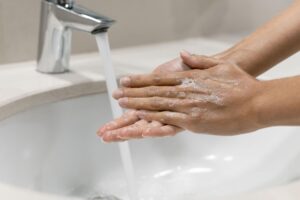
Employees should wet their hands with running water, apply soap, and thoroughly clean all hand surfaces, including between the fingers and around the nails. They should then rinse their hands and dry them with single-use paper towels or another appropriate hygienic method.
Gloves do not replace handwashing. Employees must wash their hands before putting on gloves and change gloves when they become contaminated, damaged, or when switching tasks as required by the procedure.
4.What HACCP Documentation Is Needed for Sink Hygiene and Handwashing?

The presence of sinks does not prove that hygiene requirements are being met. A food business must establish appropriate procedures, ensure employees understand how to follow them, and verify that the controls work effectively.
Sink hygiene, handwashing, and cross-contamination prevention are generally managed through prerequisite programmes (PRPs). The exact documentation depends on the nature of the business and its food safety management system.
The main documents and records may include:
1. Personal hygiene procedure. This defines when and how employees must wash their hands, the correct technique, glove-use requirements, and employee responsibilities.
2. Cleaning and disinfection programme. This specifies what must be cleaned, which products should be used, how frequently cleaning must take place, and who is responsible. Where necessary, it should also specify disinfectant concentration and contact time.
3. Cleaning records. These may document the completed task, date, responsible employee, verification results, and any corrective action taken.
4. Hygiene inspection checklist. This can be used to check sink cleanliness, water availability, the presence of soap and paper towels, and employees’ compliance with hygiene practices.
5. Employee training records. These should demonstrate that employees have received training on handwashing, cleaning and disinfection, and the prevention of cross-contamination.
6. Maintenance and corrective-action records. Defects such as a broken tap, blocked drain, interrupted water supply, or missing soap should be recorded alongside the actions taken to resolve them.
The business should periodically verify that procedures are being implemented effectively. This may include supervisory inspections, record reviews, and hygiene testing where appropriate.
It is important to understand that not every hygiene procedure is a Critical Control Point (CCP). CCPs are determined through hazard analysis. Handwashing and sink cleaning are generally managed through prerequisite programmes.
Conclusion

The correct number, placement, and use of sinks help prevent microbial contamination in food businesses. Each establishment should have hygiene facilities appropriate to its activities, clearly defined procedures, and employees who understand the importance of handwashing and maintaining a clean working environment.
HACCP documentation should demonstrate not only that procedures have been established, but also that they are implemented and monitored in practice.
Food safety starts with well-designed facilities, trained employees, and hygiene practices that are followed every day.
Note: Sink numbers and technical requirements must be verified against current Georgian legislation and the specific activities carried out at the premises.
References